

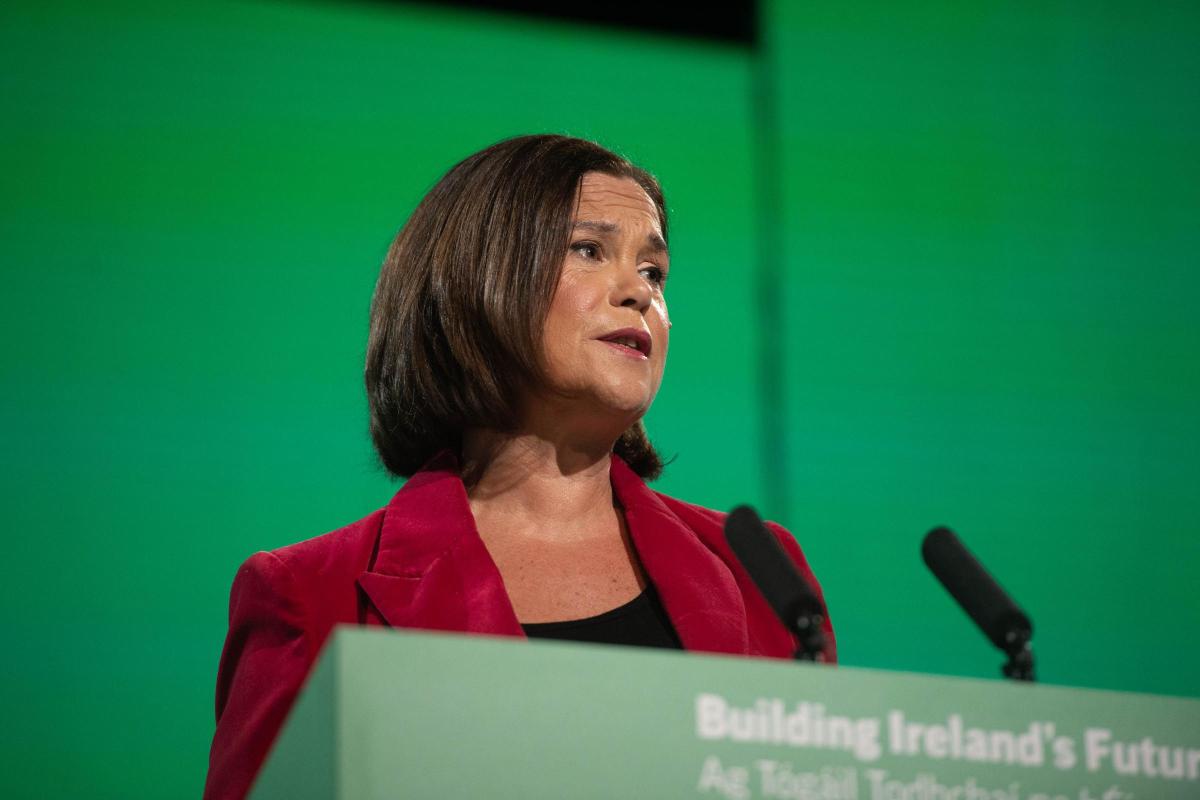

Irish premier Micheál Martin has called a unity Bill tabled by Sinn Féin as “not credible” as leader Mary Lou McDonald warned the issue was “not going away, you know”.
Ms McDonald tabled a Bill that would require a Green Paper on Irish unity to be published within 18 months, as well as provide for the convening of a Citizens’ Assembly.
The Irish Government is to oppose the Planning for Constitutional Change Bill in a vote scheduled for Wednesday, which Sinn Féin described as a “political test” for the coalition parties.
Tánaiste and Fine Gael leader Simon Harris said he did not doubt the “bona fides” of Ms McDonald and her party on tabling the Bill, but said constitutional change “cannot be driven by deadlines or arbitrary timelines”.
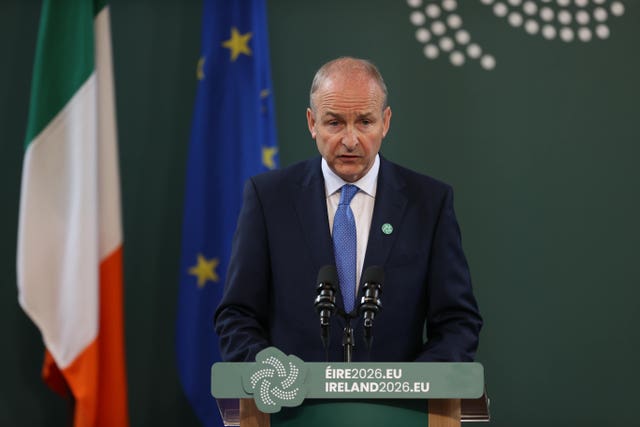
Ms McDonald said now was the “time to write the next chapter, the chapter of reunification”, as former Sinn Féin leader Gerry Adams watched from the Dáil’s public gallery.
“Reunification is of course about removing the border, but not only that, it is about so much more,” she said at the second stage of the Bill.
“It is about seizing the moment and the opportunity to create a new deal for the people of Ireland, for every person on this island, a new deal for Protestants and unionists, which protects their British identity and replaces the bad treatment and abandonment from Westminster with real ownership, inclusion and respect as a full citizen, to have a real stake in the future where that British identity is secure.”
Ms McDonald said the government were “grossly and vastly underestimating where people are at on this issue” and said there was public support for the Irish unity legislation.
She added: “So to anybody who believes this issue will go away, it’s not going away, you know.”
Mr Martin said the Bill would “do little to achieve its objective” and takes an approach “which has failed repeatedly over the past 100 years”.
“Instead of waving flags in people’s faces and talking about the inevitable march of history, we need people to be open about the scale of the obstacles to overcome and the spirit of a peace agreement, which is the bedrock upon which we can build our future,” he told TDs.
He said sectarian murder and destruction had “deepened” division and those who had sought unification by peaceful means had “failed to create a vision for the future”.
He said the proposal for a policy statement on Irish unity centred around “the assumptions of ‘one more push’ or ‘demography is destiny’, which have always failed”.
He said of the Bill: “All analysis and proposals about the economy, education systems, health services, public service pay, the replacement of sterling, legal systems, policing, legacy, culture, identity, and constitutional structures must be completed in a year and a half. This is obviously not credible.”
He added: “Please let’s move beyond the new slogan that all we need is government advocacy and a Citizens’ Assembly, and then we’ll be ready.
“A policy of ‘one more push’ and hoping for an unpopular government in London will achieve nothing.
“If we can share a common understanding of the facts then we can discuss our future on an informed basis, rather than simply singing the old songs and expecting something new to happen.”
Sinn Féin’s chief whip told Mr Martin that he was “no Albert Reynolds and no Bertie Ahern”, and asked him to reflect on the words of Charles Stewart Parnell that “no man has a right to fix the boundary of the march of a nation”.
Sinn Féin TD Donnchadh Ó Laoghaire said it was “reckless” that the Irish government was taking “no positive action” to plan and prepare for Irish unity and accused Mr Martin of giving a “familiar, hackneyed, un-serious” response.
“Listening to the speeches across the chamber today and talking to colleagues, to be honest, the only conclusion I can arrive at is that we wouldn’t even have a division tonight except for the views of one man.
“So I put this to Micheál Martin, this is the vehicle we have put forward for planning and preparing for constitutional change, where is yours?”
The Irish Government confirmed it would oppose the Bill after a Fianna Fáil TD suggested many of his colleagues would back the proposals if there had been a free vote on the matter.
Ahead of the debate on Tuesday evening, Ms McDonald called for support for the Bill and highlighted that Mr Harris said his party would bring forward a “blueprint” for Irish unification by November, and said it would be “kind of astonishing” if Fianna Fáil was to vote against legislation “whose sole purpose is to prepare for referendums on Irish unity”.
At a briefing earlier, Fianna Fáil TD Pat “the Cope” Gallagher said he had not been “told officially what we’re doing”, but would support the Bill if he was to be given a free vote.
He added: “I would be anxious that we could move forward, that this vote would be carried. I’m not so sure what might happen.
“I haven’t been told officially what we’re doing, but I’ve been loyal since I came in here in 1981 and I’m hardly going to change now – but I will try and use my influence to ensure that we could move on with the Green Paper within 18 months or 24 months, or whatever it may be.”
He said “a lot” of his colleagues would feel the same way, but added: “I’m waiting to hear the statement by the leader of my party, what the views are there, and we’ll wait and see what happens.”
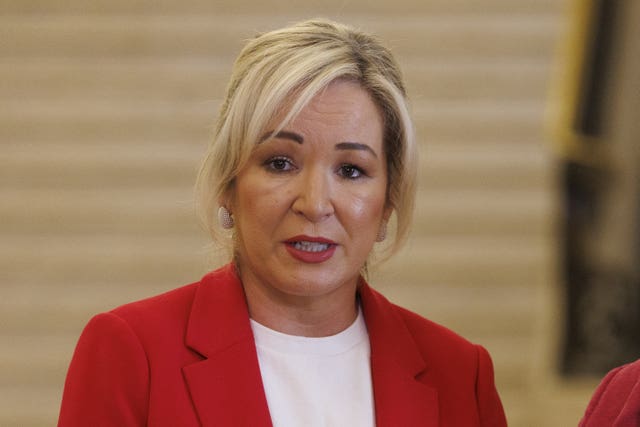
Sinn Féin deputy leader and Northern Ireland First Minister Michelle O’Neill said a vote against the legislation would send a “really negative message” to those in the region and “really set back the project of our nationhood”.
Its leadership is due to speak to Andy Burnham, who is widely expected to become the next UK prime minister in the coming weeks.
Asked if she expected Mr Burnham’s premiership to materially differ from Sir Keir Starmer’s, Ms O’Neill said: “The short answer would be no, I don’t expect anything to be any different.
“This will be my seventh prime minister that I’ve been dealing with in 10 years. It underlines the chaos of Westminster.
“It underlines why more than ever we need this legislation passed and why we need to plan for the future, because I’m very certain that citizens in the North will be much better served in a new constitutional arrangement, a united Ireland, a better future for all of us.”